

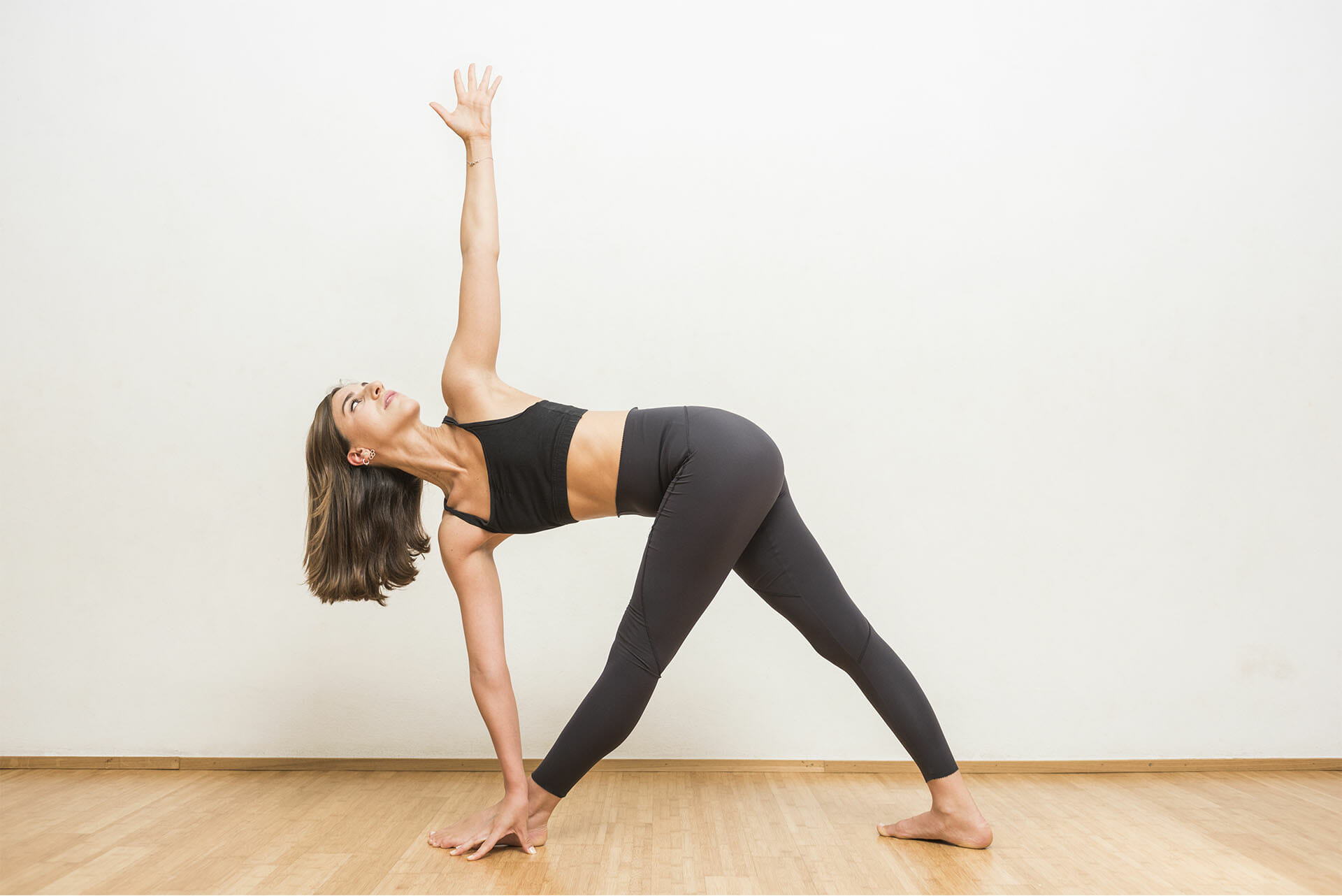
Iyengar Yoga
Iyengar
B.K.S. Iyengar is the yogi whose fervor and distinctive teaching led his own students to name a style after him. The root of this style is classic Hatha yoga, but what makes the Iyengar method special is the utmost emphasis on precision in the postures and the striving towards extreme positions. This precision is of course built over time and with practice, but above all through the use of props such as straps, bolsters, wooden blocks or chairs, which make it easier to perform the postures correctly and allow everyone to practice them despite the limits of different body types, conditions or age.
Time is fundamental in the Iyengar method: depending on the asana, students may be asked to hold a pose for a minute or more. This approach helps activate and strengthen stabilizing muscles that conventional exercises may not engage. And by gaining stability, you can achieve significantly greater extension, flexibility and range of motion. As the body adapts to the conditioning, posture naturally improves. The result is a dynamically strong and agile body.
Iyengar systematized more than 200 classic yoga postures and 14 types of pranayama techniques, carefully describing every detail of how to perform them. Categories were then created to allow gradual learning, from the easiest postures to the most complex.
Besides the visible benefits, the Iyengar method also has important benefits for the internal organs, bringing them to a better state of health. In particular, the cardiovascular, digestive and respiratory systems become less constricted, allowing blood and breath to flow more easily throughout the body, which can help prevent illness and remove toxins. It also has a lasting impact on muscle endurance, hydration and immune response.